
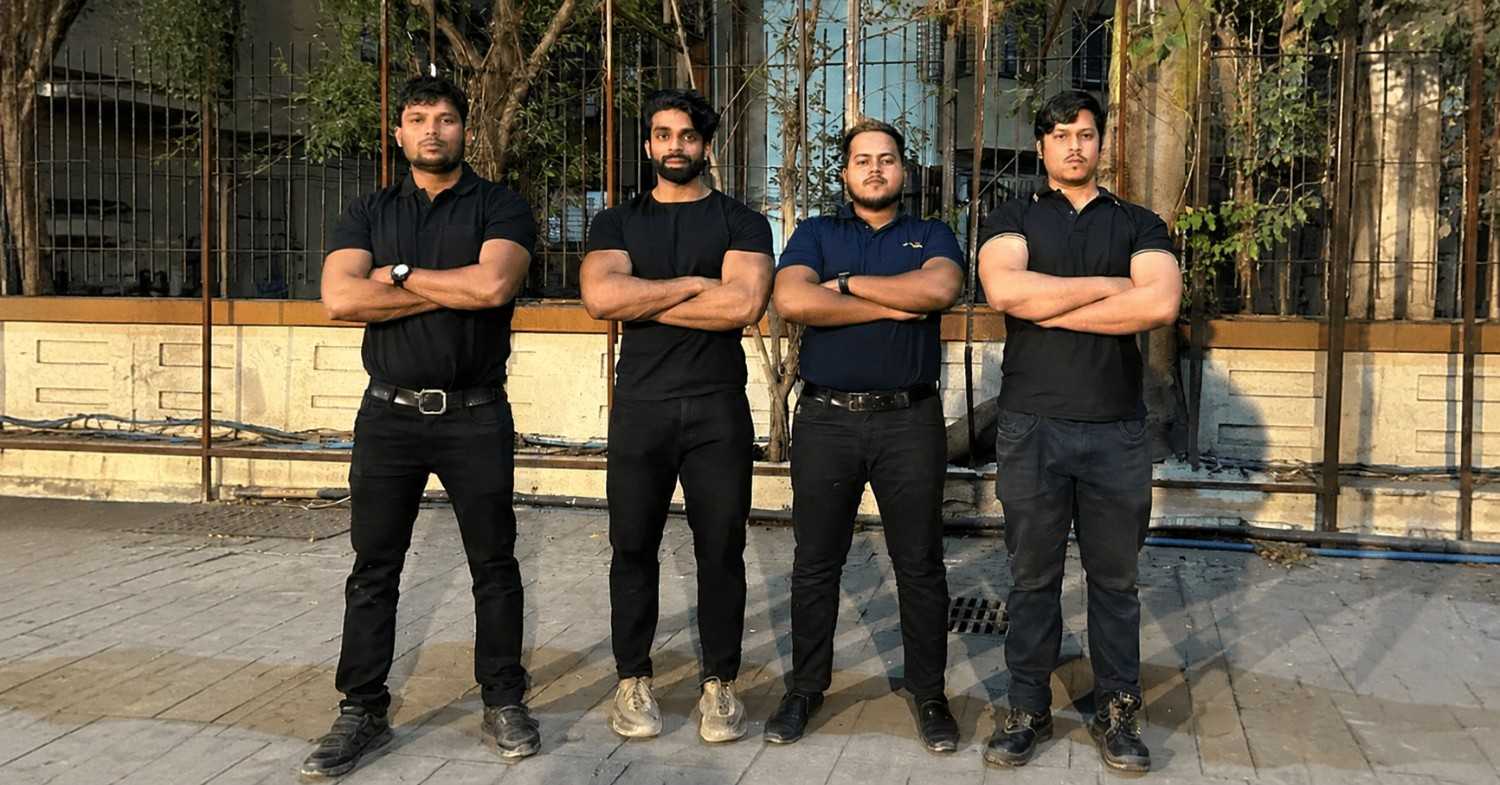
Most people think of a society guard as someone who opens the gate, signs a register, and calls it done. In reality the job covers a lot more ground than that. Visitor screening, parking, night patrols, camera monitoring, emergency response — a guard handling all of this properly is a different thing entirely from one who is just present. If your society has had security issues despite having guards, the setup is usually the problem, not the people. This guide breaks down what the job actually involves, how to figure out how many guards you need, and what to look for before you hire anyone
What security guards actually do in a housing society
The gate is the visible part of the job. The real work spreads across the whole compound. On a normal day, a guard is logging every visitor, checking who they’re here to meet, and ringing the flat before the gate opens. They’re keeping resident and guest parking sorted, making sure fire lanes stay clear. They walk the basement, terrace, staircases, and play areas on a fixed round, not staying planted in one spot. Couriers, domestic help, and vendors get signed in so nobody slips through unrecorded. From the cabin, a guard with a working camera setup can catch things before they escalate. Someone sitting in the parking area who does not belong there. A vendor who was supposed to leave an hour ago. Small things that are easy to miss on foot but obvious on a screen if you are actually watching. That said, a lot of society camera systems are either pointed the wrong way or nobody has checked them in months. A guard cannot do much with a feed that cuts out or does not cover the back gate. When something goes wrong, and at some point it will, the guard is the first call. Not the police, not the committee. The guard. So they need to know what to do, not just how to dial a number.
A guard who does all of this properly is worth several who just sign the register and go back to their phone.
How many security guards does a housing society need?
This is where most societies underestimate. The number feels straightforward until you do the actual math.
Guards work eight-hour shifts. Three guards cover 24 hours. But everyone gets a weekly off, so if you have three guards and one is on leave, a shift goes unmanned. You need a fourth to cover that. So for a single gate you want manned around the clock, you’re looking at four guards minimum.
From there, count how many entry and exit points you want covered and for how many hours. Round-the-clock posts need four guards each. A gate you only want covered during the day needs two. A society with two gates running 24 hours lands somewhere between six and eight guards, and larger sites usually need a supervisor on top of that.
Go below these numbers and the gaps show up at shift changes and on weekly offs. That is not a coincidence. It is exactly when incidents tend to happen.
In-house guards vs. a security agency: which works better?
Most societies eventually face this choice, and the right answer depends on how much the committee is willing to manage directly.
Hiring guards yourself means the committee owns everything: recruiting, payroll, PF and ESIC filings, minimum wage compliance, training. You decide who works at your gate, which is a real advantage. But when someone is absent, you’re the one finding cover. When there’s a wage dispute or a compliance notice, that’s yours to deal with too. Societies that do this well usually have a committee member who’s genuinely on top of it. Societies that don’t tend to find it quietly falling apart within a year.
An agency takes most of this off the committee’s hands. Hiring, compliance, training, finding cover when someone does not show up — that is their job, not yours. You get one monthly invoice. What you give up is direct control over who shows up. You are trusting the agency’s standards, not setting your own. So the agency’s track record matters more than anything else in the pitch they give you.
Before signing with anyone, check that they hold a valid PSARA licence (Private Security Agencies Regulation Act, 2005). It’s a legal requirement for security agencies in India, not just a quality signal. You can read more about how professional security guard services in Mumbai are typically structured if you want a clearer picture of what to expect.
What to check before you hire
Whichever route you take, a few things are non-negotiable.
The agency needs a valid PSARA licence. Ask to see it, not just hear about it. Guards should be police-verified with documented background checks. Ask what their training actually covers beyond gate duty. Fire safety and basic first aid should be included, not treated as an afterthought. And check that proper records are being maintained every single shift, not just when someone remembers to fill in the register.
You also want a named supervisor and a direct escalation number that works at night and on weekends. Get a written guarantee that absences will be covered so a post never sits empty. And confirm that wages, PF, and ESIC are being paid correctly. If the agency is cutting corners on statutory compliance, that liability can land on the society.
The security gaps most societies miss
Here’s what’s worth saying plainly: a lot of societies already have guards and still have obvious holes in their security. The guards aren’t necessarily the problem.
The most common one is camera blind spots. A guard watching a feed can only see what the cameras actually cover, and poorly placed or unmaintained cameras leave the back gate and basement invisible. Sorting out your CCTV camera setup and your manned guarding together closes most of this.
Service entries are another one. The main gate gets watched. The back gate for maids, plumbers, and delivery staff often doesn’t, especially outside peak hours. That’s the one people actually walk through when they shouldn’t.
Visitor records are underrated too. A paper register that nobody checks, where half the entries are illegible, is barely better than nothing. Digital visitor logs are harder to fudge and take about the same amount of effort once people are used to them.
And night patrolling quietly stops being done properly. Rounds that happen on schedule until about 11 PM and then drift off are common. The hours after midnight are when they matter most.
None of these are expensive fixes. They’re mostly about accountability and habit.
FAQ
How many security guards does a housing society need?
Guards work eight-hour shifts, so you need three to cover 24 hours — but with weekly offs, you actually need four to keep a single gate manned round the clock. A society with two gates running 24 hours typically needs six to eight guards, plus a supervisor for larger sites.
Should a society hire guards directly or go through an agency?
Depends on the committee. Direct hiring gives you more control but the payroll, compliance, and replacement headaches are yours. An agency takes most of that off your plate, but you’re only as good as the agency you pick.
What is PSARA and does it matter?
It matters a lot. PSARA (Private Security Agencies Regulation Act, 2005) is the law that governs security agencies in India. An agency without a valid PSARA licence is operating illegally, and that creates risk for the society too.
Are female security guards worth having in a housing society?
Honestly, more societies should consider it. There are situations where a male guard simply cannot do the job, frisking female visitors being the obvious one. Beyond that, having a lady guard on duty tends to make women residents more comfortable raising concerns they might otherwise let go. During festivals or events when more people are coming and going, they earn their place pretty quickly.
What affects the cost of security guards for a housing society?
City, number of guards, shift hours, and experience level all play a role. But what most committees miss is that two agencies quoting the same monthly figure can be structured very differently underneath. Break it down per guard per shift before you decide anything.
Conclusion
There’s no version of good society security that’s just about hiring more people. The societies that handle it well tend to have clear records, trained guards who know what to do when something goes wrong, and no obvious gaps between what the cameras see and what the guards cover. Start with your entry points, get the staffing numbers right, and make sure whoever you hire is licensed and accountable. The rest is maintenance.